


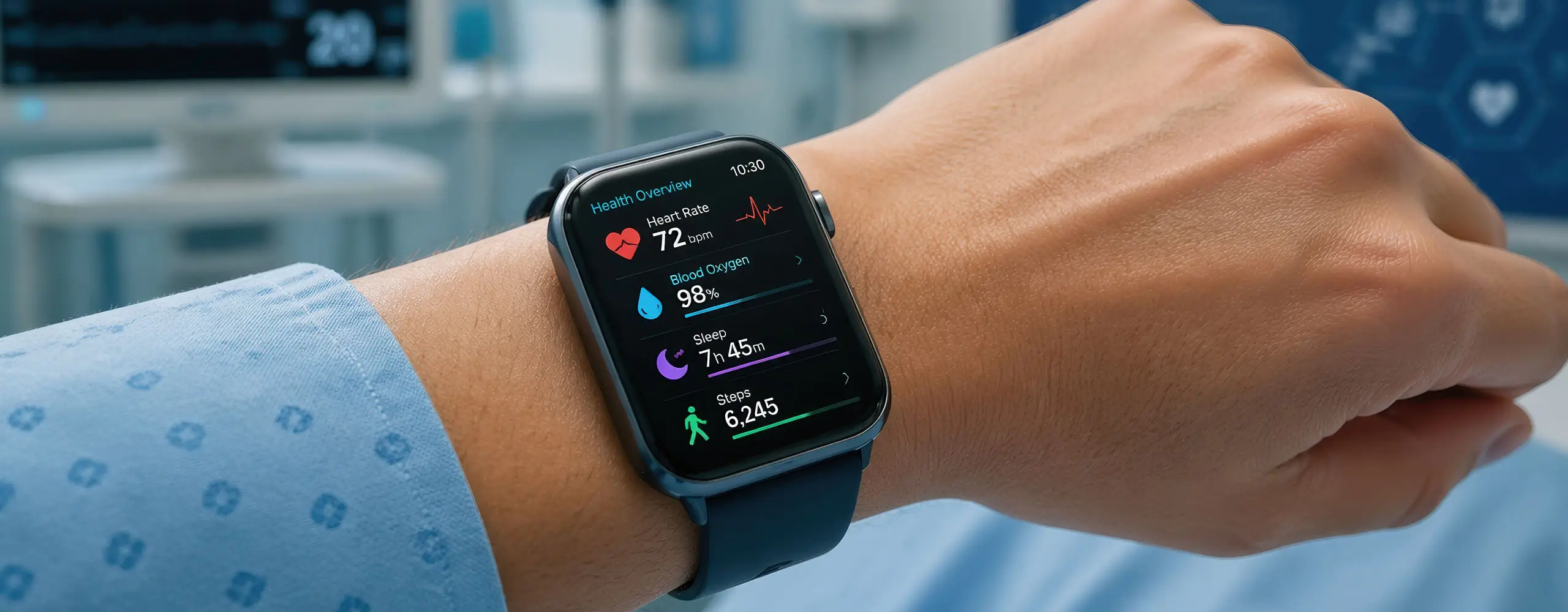
The growing adoption of smartwatches, medical sensors, and wearable devices is transforming the way data is collected and analyzed in digital clinical trials.
But what are wearable devices? They are wearable technologies, such as heart monitors, smartwatches, and continuous glucose monitoring sensors, that can record patients’ physiological and behavioral parameters in real time.
The shift from traditional data collection during on-site visits to continuous monitoring provides evidence that more accurately reflects patients’ real-world experiences. Data generated by wearables enriches clinical endpoints, improves the quality of analyses, and make clinical research more representative of everyday patient life.
Data management challenges: handling large volumes of data
Integrating wearable devices into clinical trials introduces new operational complexities.
In this context, a key question arises: what are medical device clinical trials? These are regulated studies conducted to evaluate the safety, performance, and effectiveness of medical devices, including wearable sensors and digital health technologies.
Some of the main operational challenges include:
- data volume and velocity: sensors operating 24/7 generate millions of measurements that can overwhelm data processing pipelines and slow statistical activities.
- Normalization and standardization: data from different devices often use heterogeneous formats that require integration and harmonization before analysis.
- System validation: every external data source must be qualified and documented according to 21 CFR Part 11 requirements.
- Continuous audit trail: every modification, correction, or anomaly must be recorded in a traceable manner to ensure GCP compliance.
To address these challenges, organizations need a platform capable of centralizing, standardizing, and tracking every data stream generated by wearable devices.
Discover how ACTide eCRF enables seamless integration of wearable data into the clinical ecosystem, ensuring data quality, regulatory compliance, and full traceability throughout every phase of the study.

Centralizing data flows: connecting wearables to the clinical ecosystem
One of the biggest challenges in wearable-based clinical trials is data fragmentation across multiple systems. Effective integration requires that data flows directly into the trial ecosystem, avoiding technological silos.
With ACTide eCRF, data streams generated by wearable devices are captured, validated, and standardized from the source, making information immediately available for monitoring and statistical analysis. This approach reduces transcription errors, improves data quality, and facilitates the management of multicenter studies involving high volumes of information.
In addition, standardization according to CDISC standards and complete data traceability support the compliance requirements imposed by regulatory authorities.
Want to see how wearable data can be integrated into your clinical studies securely, compliantly, and at scale?
Remote monitoring and real-time patient safety
With ACTide Safety Tool, physicians, CRAs, and Clinical Operations teams can continuously monitor study progress through automated workflows and configurable alerts.
Key benefits:
- real-time alerts: the system notifies clinical teams whenever protocol-defined critical thresholds are exceeded.
- Centralized dashboard: CRAs and Data Managers can monitor all patients from a single environment, using a real-time clinical trial monitoring dashboard.
- Reduced unplanned visits: continuous remote monitoring enables earlier intervention and minimizes the need for urgent site visits.
- FDA 21 CFR Part 11 and EU Annex 11 compliance: all data streams are protected, traceable, and managed according to applicable regulatory requirements.
Discover how ACTide Safety Tool supports safety management and early identification of critical events in your clinical studies.
The future of decentralized and connected trials
The integration of wearable devices into clinical trials is no longer an emerging trend, it has become a strategic component of the transformation toward digital and decentralized clinical research.
The combination of wearable technologies, clinical data management platforms, and workflow automation improves data quality, reduces costs, and accelerates clinical study startup.
In this evolving landscape, solutions such as ACTide ePro enable the integration of data collection and patient engagement within a single, interoperable ecosystem.
Are you designing a digital clinical study and looking to integrate wearable device data securely and compliantly?
Discover how the modular ACTide ecosystem can support your project. Visit the ACTide website and contact us today.