


A participant can manage a demanding study visit once. Repeating that journey for eighteen months is a different commitment. Work, family responsibilities and changing health can gradually make participation harder.
What does retention mean in research?
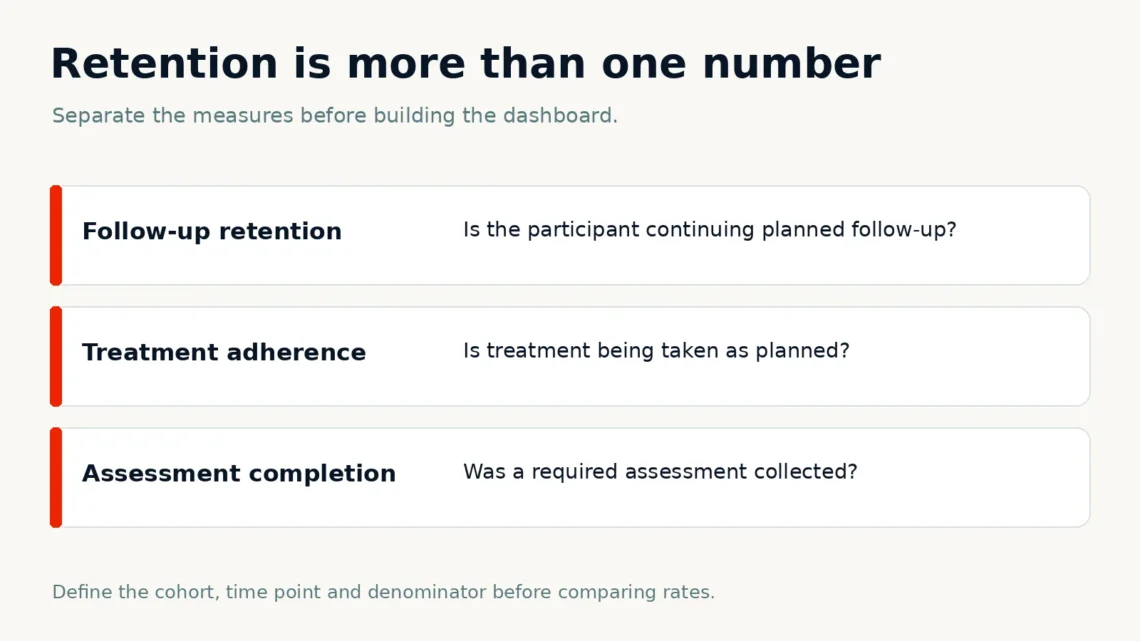
It means keeping participants involved in the planned follow-up so the study can answer its research questions. Treatment discontinuation and withdrawal from follow-up are different events.
For CROs, patient retention in long trials protects endpoint completeness, statistical power and resources. Technology helps when it removes practical barriers and connects participants with timely human support.
Why patients drop out of long trials
Frequent appointments, invasive procedures and travel can compete with everyday life. Motivation may change, especially when participants perceive little benefit or feel uncertain about what happens next. Adverse events and worsening health also require clinical attention, not simply more engagement messages.
Long duration can compound these pressures, but it is not a universal explanation for withdrawal. Start by mapping the burden of each procedure and asking participants which tasks are hardest to sustain.
The FDA’s guidance on enhancing clinical-trial participation recommends approaches to reducing participation barriers. Design decisions should address those barriers before enrollment.
Review the participant journey at screening, during stable follow-up and after a change in health. A schedule that appears manageable at enrollment may become difficult later.
Plan how sites can discuss difficulties without making participants feel pressured to continue.
What is an acceptable retention rate?
There is no universal percentage that makes every trial acceptable. Set targets around the endpoint, follow-up duration, population and assumptions used in the statistical design.
Measure participants reaching the required follow-up separately from questionnaire completion or treatment adherence. A strong overall figure can conceal missing primary outcomes or differences between study arms.
The EMA’s guideline on missing data in confirmatory clinical trials emphasizes preventing missing data, including after treatment discontinuation. Retention planning must therefore involve clinical operations, data management and statistics.
Use hybrid approaches to reduce participation burden
Home visits, local testing and remote participation can remove avoidable journeys. Telemedicine can replace selected appointments when the protocol, clinical needs and applicable requirements allow it.
The FDA’s guidance on decentralized elements supports considering these approaches while maintaining appropriate oversight. Keep physical visits where examination, treatment administration or safety assessment requires them.
The EC/HMA/EMA recommendations on decentralized elements also highlight national conditions for these activities.
Offer practical alternatives for participants with limited connectivity or digital confidence. Moving a task online should make it easier to complete, rather than transfer administrative work to the participant.

The solution: make everyday engagement easier
An intuitive ePRO workflow can reduce the effort of reporting symptoms between visits. Keep assessment schedules proportionate, instructions clear and navigation consistent. Multilingual interfaces need appropriate questionnaire translations and participant testing.
Explore further digital patient engagement strategies when planning ongoing support.
Simple ePRO, relevant reminders and language support
Reminders can help with forgetfulness, but effectiveness depends on context. A randomized study of personalized text messages found uncertain effects on short-term telephone follow-up; it does not establish a guaranteed benefit in long trials. Review notification timing and provide a reachable support contact.
CTA: ACTide ePRO offers a responsive, multilingual interface, on-device notifications and direct storage in the eCRF database. ACTide’s eConsent overview describes integration with eCRF and ePRO, supporting a connected participant journey from enrollment onward.
Turn engagement signals into timely follow-up
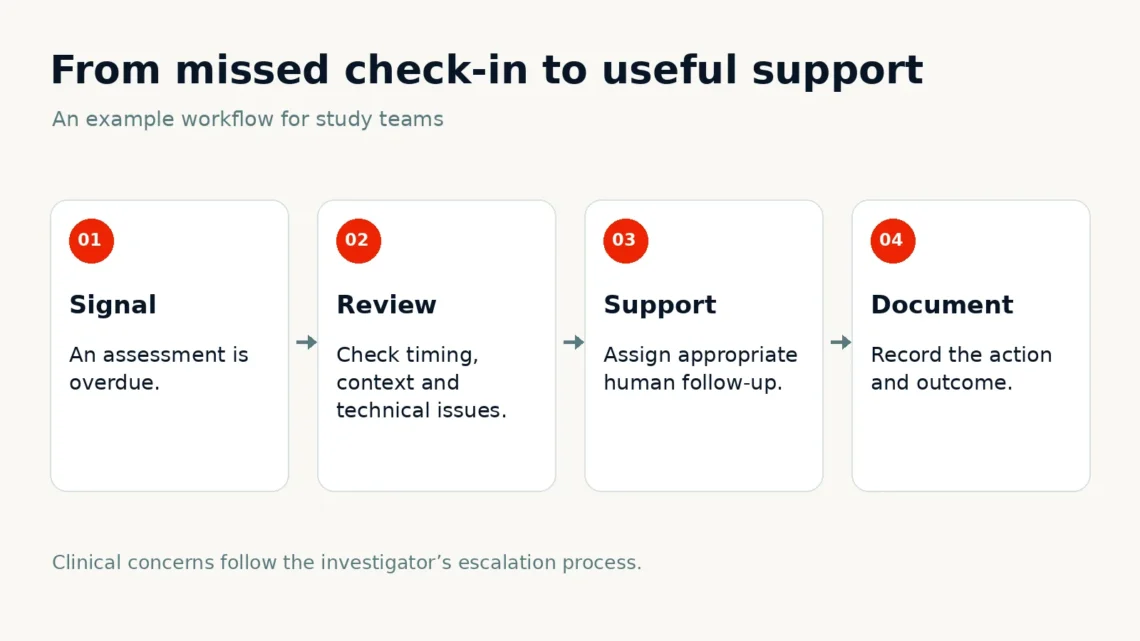
Missed check-ins, repeated incomplete assessments or declining response frequency can justify investigation. They do not prove that a participant intends to withdraw: device problems, illness or an unsuitable schedule may explain the pattern.
Define who reviews signals, how quickly they respond and which issues require clinical escalation. Site and country dashboards should use comparable denominators and account for participants’ time in the study.
Early warning is a prompt for review
Predictive models require validation for their intended population and monitoring for misleading alerts. Do not confuse an operational rule with a validated prediction of drop-out. ACTide’s article on clinical trial intelligence provides context for data-driven oversight; specific retention models should be evaluated separately.
Request an ACTide demo to explore ePRO, eCRF, eConsent and data-management workflows for your next long-term study.
Reduce site workload with connected data
Disconnected tools can leave coordinators reconciling lists instead of helping participants. Connect engagement monitoring with a documented follow-up process and clear ownership.
ACTide eCRF connects clinical data collection with the ecosystem. ACTide Data Manager Tools and Services supports monitoring data acquisition, including completion percentages and clarification response times. These indicators inform study oversight; they are not evidence of an automatic reduction in drop-out.
Ask vendors to demonstrate an overdue assessment from detection through documented resolution, including the site’s workload.
During platform evaluation, check whether staff can:
- Identify assessments that are due, rather than treating every blank field as missing.
- Assign follow-up to a named team member and record the outcome.
- Distinguish technical support requests from issues requiring investigator review.
Design retention before enrollment
Patient retention strategies in clinical trials work best as a coordinated plan: proportionate procedures, usable technology and human support.
Request an ACTide demo to explore ePRO, eCRF, eConsent and data-management workflows for your next long-term study.